
Indian rice exporters are seeking urgent government support to mitigate the impact of shipping disruptions caused by the Iran crisis and instability in key maritime routes. The disruptions have led to increased freight rates, insurance premiums, and fuel costs, impacting domestic prices and exporter profitability.
Rice exporters in Haryana are facing potential payment delays and shipment disruptions to Iran and Afghanistan following recent military strikes on Iran.
Civil unrest in Iran has started impacting India's basmati rice exports to the country, leading to a sharp fall in domestic prices, as exporters face payment delays and mounting uncertainties, an industry body said on Tuesday. The Indian Rice Exporters Federation (IREF) urged exporters to reassess risks on Iranian contracts and adopt secured payment mechanisms, warning against over-leveraging inventories meant for the Iranian market.

The Indian Rice Exporter's Federation (IREF) on Tuesday urged the government to provide tax incentives, interest subvention and freight support in the upcoming 2026 Budget to strengthen the sector's competitiveness while addressing sustainability concerns.

US President Donald Trump has said that India should not be "dumping" rice into the United States market and he will "take care" of it, while stressing that tariffs will solve the "problem" easily.
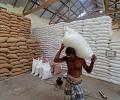
Exports of high-quality basmati rice from India grew by 22 per cent to $5.2 billion during April 2023-February 2024, amid robust demand, primarily from West Asia. According to data compiled by the commerce department, exports of basmati rice increased to 4.68 million metric tonnes (MMT) in April-February, from 4.1 MMT during the same period a year ago, registering a growth of 14 per cent.
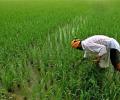
India is already a heavyweight in global farm trade in pockets such as rice exports, but experts are urging a pivot from a subsidy- and procurement-driven mindset to a productivity and nutrition strategy that still shields farmers from volatility.

The government's decision to impose a 20 per cent export duty on parboiled rice and a $1,200 per tonne minimum export price (MEP) on basmati rice has pulled down overseas shipments of the former by almost 83 per cent and around 30 per cent of basmati exports in a month. Data sourced from various trade agencies and shippers showed that between August 25 and September 20, export of basmati rice has shrunk from 342,605 tonnes in 2022 to around 241,083 tonnes in 2023. Similarly, export of parboiled rice, after the imposition of 20 per cent duty during the same period, has dropped from 1.16 million tonnes in 2022 to just around 204,190 tonnes in 2023.
India has fully protected its sensitive sectors like dairy, rice, wheat, pulses, tea, genetically modified (GM) goods, and coffee by not granting any import duty concessions to the European Union (EU) under the bilateral free trade agreement, according to the Commerce Ministry.
500,000 tonnes of sugar exports allowed on top of an existing 1.5 mt window

India's ban on non-basmati rice exports has been a boon to competitors like Thailand whose shipments have risen by 1.7 million tonnes in 2008, the US Department of Agriculture (USDA) said.
India's rice export is estimated to have reduced by a half to nearly 2.5 million tonnes in 2008-09 against the previous fiscal, though overseas shipment of the commodity has remained at about the same level in value.
A strong rupee is creating problems for the exporters in India. One of the victims of the rupee vagaries is the rice exporter.
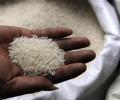
In order to help farmers, the government has increased minimum support price for the last several years. This has made Indian rice uncompetitive for exports.

The rice export increased by 1.75 million tonnes to a record 9.75 million tonnes in 2012.
Taking yet another measure to check inflation through improving domestic supplies, the government today stopped export incentives on basmati rice. "Export of basmati rice shall not be entitled for DEPB (Duty Entitlement Pass Book) benefits," the Directorate General of Foreign Trade said in a notice. Government has already banned export of non-basmati rice & revised upward the minimum export price for basmati rice. Inflation for the week ended March 22 has touched the 7% mark.

Domestic equities surged on Tuesday, posting their best single-day gains in more than eight months after a long-awaited trade deal between India and the US. The deal, which lowered tariffs on Indian goods to 18 per cent from 50 per cent, significantly improved investor sentiment and lifted a key overhang for the market.
Upset over objections raised by the government on their Rs 21-crore (Rs 210 million) proposal to launch a global Basmati promotion campaign featuring Bollywood star Shahrukh Khan, rice exporters will present their case before the commerce ministry.

Rice exporters have requested the Centre for a flat export duty of $80 per tonne for parboiled rice instead of the current 20 per cent duty to smoothen trade, a top official of the rice exporters' umbrella body said on Sunday. The Indian Rice Exporters Federation (IREF) has also requested the government to reconsider its export ban on white rice which was imposed in July and reduction in the minimum export price for basmati rice to $850 per tonne to prevent negative impacts on both export volumes and farmers. On Friday, the government had extended the 20 per cent duty on parboiled rice exports until March 24.

India's exports jumped by 19.37 per cent to $38.13 billion in November, while imports dipped by 1.88 per cent to $62.66 billion, according to government data released on Monday.
"I am not giving you any date or I am not promising you any thing but things will ease and we will be able to remove these temporary restrictions," the minister said. He further said for the first time three crisis in global economy -- fuel, food and financial - caused certain strains in Indian economy and forced the government to put certain restrictions on export of non-basmati rice.
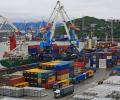
The country's exports rose marginally by 0.61 per cent to $36.56 billion in January, while trade deficit widened to a three-month high of $34.68 billion, government data showed on Monday.

India has completely protected the interests of its agriculture and dairy sector in the India-US trade agreement.
India's rice exports have not been hurt because of the war in Iraq but could face a slowdown in shipments to Kuwait, traders and analysts said on Wednesday.\n\n\n\n
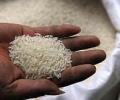
Rising rupee, local freight make export less competitive.

The government on Friday scrapped a minimum price threshold that it had set previously for exports of onion as it looked to pass on the benefit of international glut to Indian farmers. The government had previously fixed a $550 per tonne as the minimum export price (MEP), which essentially meant farmers could not sell their produce overseas at lower than this rate.

When everyone has footage and no one can verify it, the loudest voice wins, notes Prem Panicker who begins a daily blog on the War in the Middle East.

India's exports contracted 11.8 per cent to $34.38 billion in October, showed government data released on Monday. Imports jumped 16.63 per cent to $76.06 billion.

According to the US Department of Agriculture, rice exports are pegged at 9.3 million tonnes for the 2013-14 marketing year (October-September), slightly lower than 10 million tonnes in the same period last year.
US and India will promptly implement this framework and work towards finalising the interim agreement with a view to concluding a mutually beneficial bilateral trade agreement.
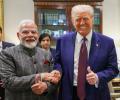
The agreement addresses non-tariff barriers and promotes increased trade in technology products and cooperation between the two countries.

'...but I would not like to put a timeline to it'

Both countries commit to provide each other preferential market access in sectors of respective interest on a sustained basis

United States representative Sydney Kamlager-Dove while talking about the famous car selfie of Prime Minister Narendra Modi with Russian President Vladimir Putin said that it spoke a thousand words.

Trump said that the decision would be "immediately" in effect and that the "order is final and conclusive."

Import duty cuts on labour-intensive sectors such as textiles and footwear, as well as cars, and wines, are likely to be part of the free trade agreement between India and the 27-nation bloc European Union (EU), the conclusion of which is set to be announced on January 27 here, sources said.

India and the European Union are set to announce on January 27 the conclusion of negotiations and finalisation of a free trade agreement, which is aimed at boosting economic ties between the two regions amid disruptions in global trade due to US tariffs, an official said.
As a panel of senior ministers deliberates on the need to review curbs on exports of some rice varieties, data shows that since outbound shipments saw restrictions in July-August last year, the non-basmati segment has suffered more than basmati exports. Sources said the panel is expected to soon deliberate on a few suggestions to ease the export curbs on some rice varieties due to higher-than-required stocks in the central pool. The panel, some observers feel, may also postpone the decision to ease the export curbs till a firm picture emerges on the latest kharif paddy sowing.
 © 2026 Rediff.com - Investor Information - Advertise with us - Disclaimer - Privacy Policy - Sitemap - Feedback - About us - Terms of use - Grievances